Examine the Materials
One way to evaluate a fluid artwork's potential longevity is by evaluating the materials used to make the piece. Most fluid artworks are made using a combination of acrylic paint and pouring mediums. In addition to those materials, some artists also use epoxy resin to add a glossy protective coating to their work. Both the type and quality of these materials will have a direct impact on the durability of your artwork.
To evaluate the materials used in making a fluid artwork, first examine the surface and structure of the artwork. A high-quality fluid artwork should be completely dry and stable to the touch. The colors within the painting should be distinct and separate from one another and not blended together to create a muddy appearance. If resin has been used to protect the artwork, the surface should appear to be smooth and transparent with no cloudy patches.
In addition to the overall appearance of your artwork, here are a few things to check when inspecting the materials used to create your fluid artwork:
- Does the paint surface feel dry to the touch?
- Is the canvas or panel that the artwork is painted on tight and properly supported?
- Are the resin coatings smooth and even with no visible bubbles or cracks?
- Do the colors in the painting exhibit good contrast and not excessive blending?
If all of these conditions are met, it is likely that the artist took great care in creating and finishing your artwork.
Observe Color and Composition
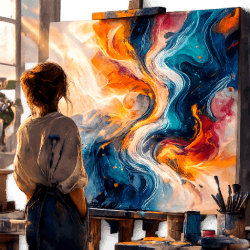
Abstract swirl paintings are influenced by color interactions and motion. They do not represent anything as an object; they represent through shapes, patterns and layers of color.
View the abstract swirl painting from a distance (away). Looking at it this way will help you to see how the colors relate throughout the whole painting. There are abstract swirl paintings which have very sharp contrast to give great visual impact, and there are those which have soft color gradations and smooth transitions.
The lighting has a lot to do with how your fluid painting looks. Natural light can reveal many of the delicate patterns of a fluid painting that you cannot see when viewing the painting in artificial lighting. When you take time to observe how different light makes your fluid painting look, you can get a better sense of what the complete essence of the piece is.
Check the Finish and Protection
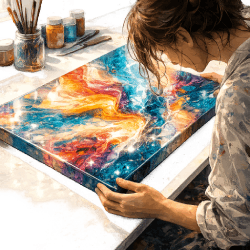
Finish refers to the protective coating applied to protect the painting and keep the colors intact. A number of fluid painters apply a finish to their pieces using varnish or resin so that dust and moisture do not damage the paint layer.
Examine the edges of the canvas closely. Some artists allow the paint to freely run off the edges of the canvas and onto the surrounding areas, while other artists separate the edge areas from the rest of the painting to give a neat border. Either approach can look good if the finish was applied evenly and properly.
- The protective coat should be uniform all over the painting.
- The edges of the canvas should appear to be clean and intentional.
- The finish should not crack, dent or dry irregularly.
Consider the Space Where It Will Be Displayed
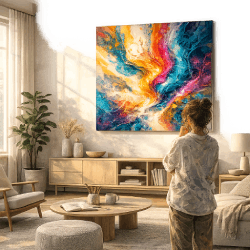
Before you buy a fluid paint piece, ask yourself, "Where am I going to put this?" Abstract Swirl Art is full of vibrant colors and dynamic motion; if you are using abstract swirl art as your focal point in a room, the artwork will likely dominate the visual space of the room.
If you have large amounts of open space (such as a living room, office), larger pieces of fluid art will typically do best in those areas. If you have limited open space (such as a hallway, personal workspace), smaller fluid art pieces are generally best for those areas.
When selecting fluid art to place on your walls, think about the overall color scheme of your room and the amount of light in the area where the fluid art will reside. The overall color of the walls and lighting can affect how the fluid art looks when mounted in your home. By choosing a piece of fluid art that fits with the environment you wish to display it in, you can rest assured that the fluid art will complement the other items in the space and still provide you with a visually impactful item.
Choosing Fluid Art with Confidence
Buying abstract swirl and fluid art paintings involves more than selecting appealing colors. Examine materials, surface quality, finish, and composition to ensure durability and visual balance. Consider where the artwork will be displayed and how lighting affects it. Careful observation helps buyers choose pieces that remain striking and well-preserved over time.